Stivers Ford Lincoln - Montgomery

Blog / Bill Jackson Ford

Recognizing When It's Time for Transmission Service for Your Ford

800transmission 1

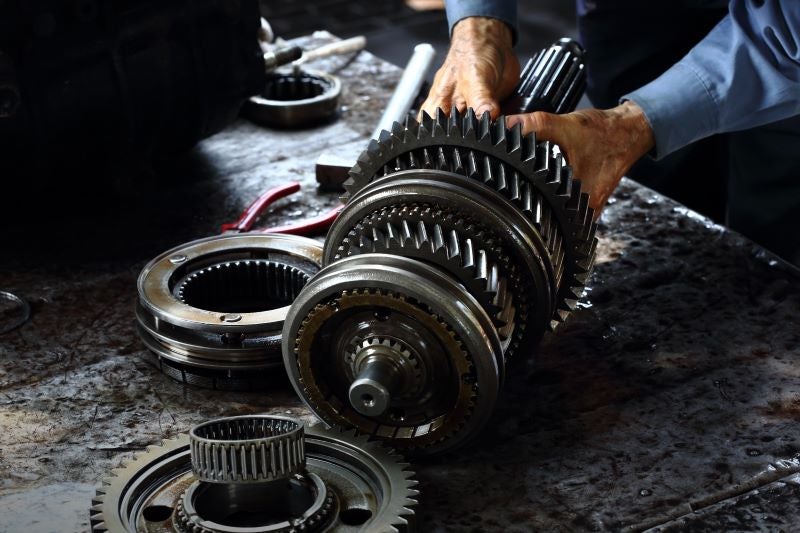
You'll typically get service at your Ford dealer on a regular schedule, but sometimes your car will let you know that it's time for a trip to the dealer in between regularly scheduled appointments. When your car needs transmission service, symptoms of the problem will be largely gear-related, though there are other issues that can crop up alongside problems with your gears that you need to be aware of.

Recognizing When It's Time for Transmission Service for Your Ford From Your Ford Dealer

Slipping Gears

When your gears get slippery, it's a sign that your next stop should be your dealer. The gears will typically slip while your car is accelerating, resulting in too much revving from your engine while moving up a gear.

When the gears slip while you're moving down a gear, the changing gears may feel harsh and happen later than expected. Because you never know when you're going to slip out of gear, it can be harder than normal to control acceleration and deceleration. This difficulty controlling your car can be very dangerous.

Trouble Changing Gears

Sometimes when your transmission isn't working correctly, you'll be completely unable to change gears. It can also be harder than usual to shift gears. Usually, this is a very easy problem to rectify, as it may just be caused by a problem with your transmission fluid.

Delayed Gear Changes

Your gears should change reliably right when you tell them to. The second you put your car in drive, you should be able to drive away, for example. However, when your transmission system is in disrepair, you might notice that your car takes a little longer than it should to respond when you change gears. As a result, it might be a few seconds before you can drive away after shifting from park to drive.

Unexpected Noises

When your car starts making new sounds, it's a sign you need to take a trip to the dealer ASAP. The sounds associated with a faulty transmission usually happen when your car is in neutral. There could be bumping noises or grinding noises coming from under the hood. You might also hear noises when you're changing gears, such as grinding sounds.

Burning Smell

When you don't have enough transmission fluid in your car, the fluid can start to burn up, or your transmission may overheat. Both of these issues result in a burning smell. Even if you don't notice the burning smell while you're driving, you may notice it when you check on your transmission fluid if your transmission fluid needs to be flushed.

Swing by Bill Jackson Ford in Troy, AL if you experience any of the issues above. Our technicians can help you out with any problem your car is having, so schedule service online today.
Posted in:

Related Posts

brakes 3

3 Signs Your Ford Needs a Brake Repair

A well-maintained braking system allows you to control your speed and stop at any time. Brake components wear out over time and can become damaged by rust or hard objects thrown up from the surface, and this makes braking more difficult. As your Ford dealer, we want to tell you some signs you need to visit us for a brake repair. 3 Signs You Need a Brake Repair at Your Ford Dealer Glazed Brake Pads The brake pads produce friction when pushed against the wheel rotors and the friction slows and stops your Ford. The pads have a rough material covering that generates this friction. A glazed pad produces no friction, as its material covering has changed to a smooth, glass-like surface. Glazing occurs when a pad is kept in contact with the rotor. This can happen if you ride your brakes, or if a jammed caliper doesn't withdraw as it should when you release the brakes. Our technicians will replace any glazed pads and check your rotors for damage. If a rotor is worn, we can resurface it to turn it smooth again. Hard Brake Pedal You expect resistance when you step on the brake pedal, and this resistance is generated by the pressurized brake fluid. If you push down on the pedal and it barely moves, this is a sign that the brake pedal booster has failed. The booster is located between the brake pedal and the rest of the braking system and is designed to make braking easier. The booster uses a vacuum system to magnify the pressure exerted on the pedal by 10 x, reducing the effort necessary to force the braking system to engage. If the vacuum system has been damaged, air will enter, preventing it from supplying the power to assist braking. We'll test the booster and install a new one if the original is damaged. Grinding Noises Harsh grinding sounds from the brakes can be caused by worn brake pads or debris lodged in a caliper. The calipers are located above the wheel rotors, and a small stone or other hard object can be thrown up from the surface and stuck in a caliper. As the caliper moves when you brake, the object will grind against the caliper and potentially damage it. When a pad needs replacement, you'll hear high-pitched screeching noises when you brake. If a worn pad isn't replaced, its material covering will wear off completely. When this happens, the bare metal of the brake pad will grind against the rotor, causing damage in the process. We'll replace any worn pads and repair or replace the rotors if they've been damaged. If you suspect something is wrong with your brakes, contact our service department right away at Bill Jackson Ford in Troy, AL.

ignition coil

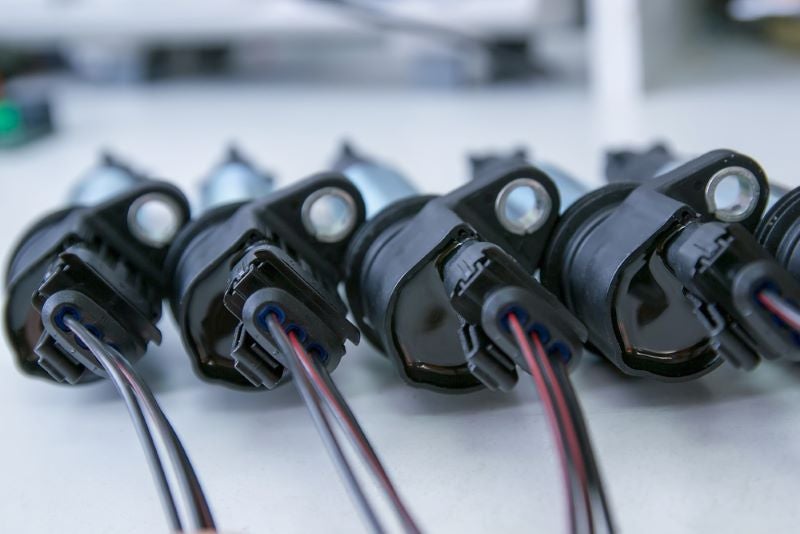
Three Signs of a Faulty Ignition Coil

Your ignition coil is a hard-working part. It takes the small amount of voltage that you get from your battery and amplifies it to up to 40,000 volts, sending all that power to the spark plugs so it can ignite your fuel. As long as it's doing this seamlessly, you'll have no problems. But a faulty coil will show itself through some signs: when you see these, visit your Ford dealer. Three Signs of a Faulty Ignition Coil Your Car Backfires If your coil is faulty, then it will not be able to send the right voltage to the spark plugs. When that happens, some of the spark plugs don't fire. This means some unburned fuel will start to leak into the combustion chambers, and this fuel can suddenly ignite because of the heat, just when the valve is opening, creating an enormous bang. If you start hearing this kind of bang, and especially if you see black smoke coming from your exhaust, you've probably got an issue with the spark plugs or the coils. Your Gas Mileage Tanks You drive your Ford every day, so you have a good idea of how often you need to fill the tank. If you're having to fill it too much, you'll notice: and the culprit could be the coils. If fuel is going to waste and the engine is struggling, this will make a dent in your ​gas budget. You're Not Feeling the Power If the coil is not taking the charge to the spark plugs like it should and the cylinders are not firing, you're just not getting the power that your engine is capable of giving you. This means you're going to notice it gets harder to cross an intersection quickly or get up to speed on the interstate. You're Struggling To Start When a coil isn't working right, the spark plugs don't get the big surge voltage they need to start the engine. You'll notice this especially when you're trying to start a cold engine, and if it's getting hard to start the car in the morning, but the battery seems fine, a coil is likely to blame. Come See Your Ford Dealer to Diagnose a Coil Fault The average coil in an engine can last somewhere from 80,000 to 100,000 miles these days, and as you bring your Ford in for regular maintenance and service, we'll check on those coils and replace them according to the right intervals. However, there are some things that can cause a coil to fail early, so if you notice any of these signs, come see us. Come see us today at Bill Jackson Ford in Troy, AL for all your maintenance needs!

auto service 4

Why OEM Parts Are Crucial for Your Ford's Performance

It may be tempting to buy aftermarket parts for your Ford, either to save money or try for a performance bump, but such endeavors can backfire. Your vehicle is carefully designed using OEM parts that work in perfect harmony, extracting the best blend of performance and efficiency. By letting your Ford dealer service your car or truck, you can be sure only the best parts are used. Why OEM Parts Are Crucial for Your Ford's Performance Quality and Reliability OEM components are precisely engineered to meet the specifications and standards set by Ford. They're typically made by companies with substantial R&D departments and/or stringent quality-control procedures. By using original parts, you'll have confidence in their durability and reliability, knowing they are the same parts factory-fitted into your vehicle when it was new. Ford uses numerous OEMs (Original Equipment Manufacturers) to supply parts, including its in-house Motorcraft division. Aftermarket parts, not being made or fitted in cooperation with Ford, are often reverse-engineered or poorly made with cheap materials to minimize their price. They could end up costing you far more money than you initially saved, or worse. Compatibility Using original parts ensures they will integrate seamlessly with the existing systems in your Ford. This compatibility is vital for maintaining optimal performance. Aftermarket parts don't always have the same compatibility, which can lead to issues with fitment and functionality. For instance, poorly fitting parts for air intake systems (e.g., air filters, intake tubes), exhaust systems, or suspension systems can seriously harm performance. Aftermarket ECUs are often installed for performance reasons (e.g., enhanced fuel mapping or throttle response, increased power), but that can lead to compatibility issues with existing systems and adversely affect both performance and reliability. Improper tuning can also accelerate wear on engine parts and often increase emissions while reducing fuel efficiency. Safety Concerns Performance and safety are closely linked aspects of driving. Suspension affects the way a car handles, for example, in its cornering, weight distribution, and ride quality. Installing substandard or poorly fitting suspension parts could compromise the vehicle's handling, especially in an emergency when flaws are placed under strain. All parts that influence steering, handling, or the car's ability to stop must fit and work perfectly. Let Your Ford Dealer Service Your Ford A qualified technician at your local Ford center will only ever install OEM components in your vehicle. Not only does that ensure optimum performance and reliability, but it also keeps any Ford warranty valid. You can legally install an aftermarket part without voiding your warranty, the problem being it will invalidate a claim if it's the root cause of a problem. Contact Bill Jackson Ford in Troy, AL for all maintenance inquiries or to schedule your next service using genuine Ford parts.